Layer 1
Daily food
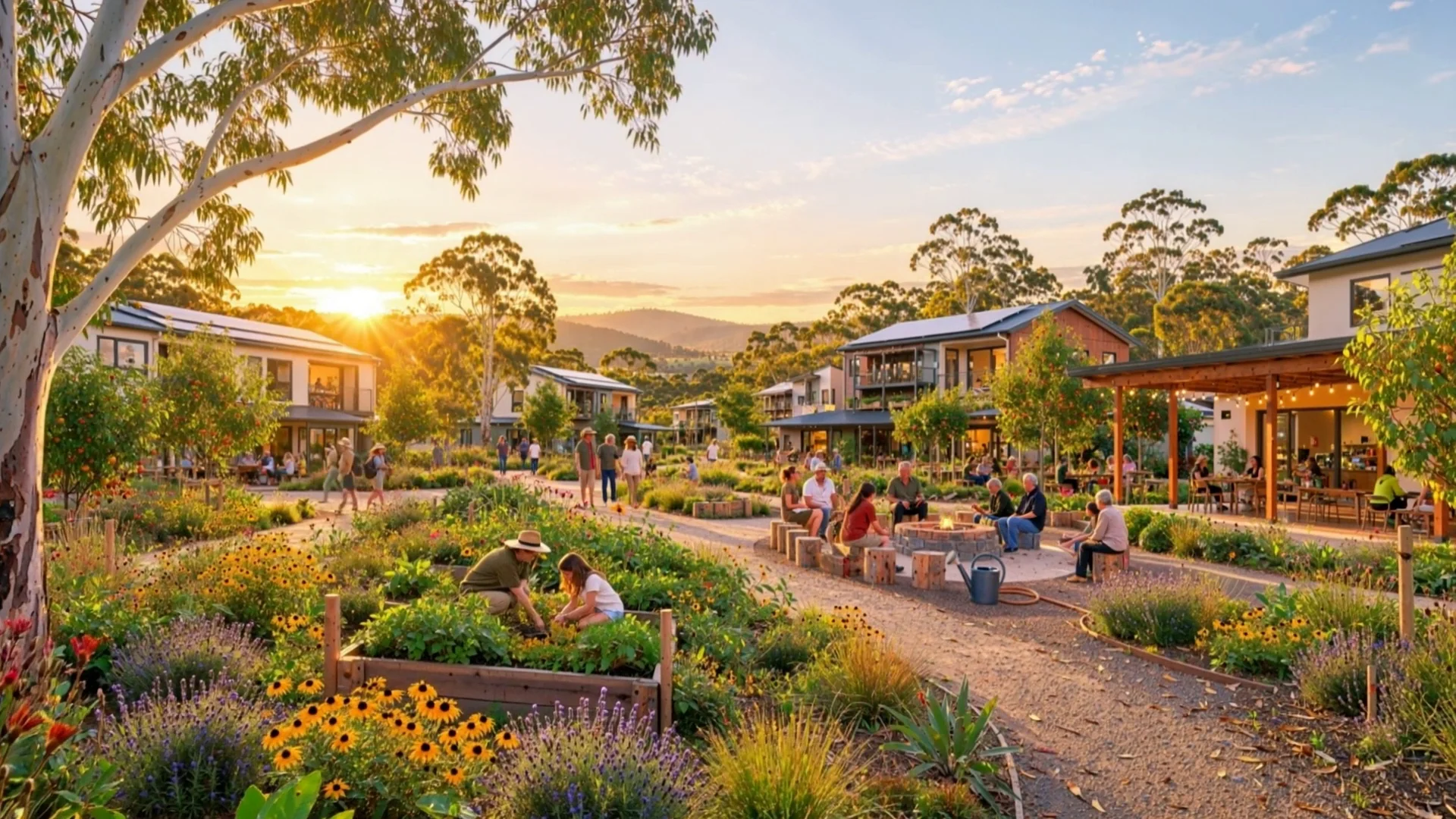
Gardens, orchards and the cafe. Fresh greens, herbs and fruit within a hundred metres of every home, and a reason to be out among neighbours every day.
 Institute
A food security plan for three regions, and a network of growers to carry it. Local food, grown close, stored well and traded between neighbours on the village exchange.

Feeding the Villages: a food security plan from Canberra to Narooma · Watch on YouTube
The food system from Canberra to Narooma copes with price rises. It does not cope with anything that closes the highways or cuts the power for more than a day.
Gardens, orchards and the cafe. Fresh greens, herbs and fruit within a hundred metres of every home, and a reason to be out among neighbours every day.
A village larder. A root cellar, a cool room and a preserving kitchen, buying regional food in season at farm price and turning it over.
Fourteen days of staples now, thirty when the Commons opens, ninety as a tested target. Eaten from every week so nothing expires. A register of who needs help first.
Three climates, from frosty tablelands to a humid coast. They harvest in different seasons, so a bad year in one is rarely a bad year in all.
Young Street. 580 m. About 59 frost nights a year.
Grows the fresh food. Greens, herbs, berries, Asian greens, sprouts and mushrooms, in courtyards, the Commons and the basement lab.
Holds the stores, the kitchen, the seed bank and the exchange.
Cannot grow the family's calories. There is not enough ground.
Frost: BoM Canberra Airport Comparison, station 070014. No frost record exists for Queanbeyan itself.
Bungendore exchange and the farm near Bungendore. About 700 m. Rain fed.
Grows the protein and the calories. Faba bean, field pea, lupin, oats, potatoes, pumpkins, onions and garlic. Hazelnut, chestnut, walnut and apple.
The only region where a plant-based family's land budget closes.
Rainfall 600 to 720 mm and falling. The farm's size, soil, water and operator are not yet published.
Rainfall: NARCliM2.0 South East and Tablelands snapshot, 2025. Crop windows: GRDC 2016, NSW DPIRD 2024.
The Narooma project. Near sea level. Mild winters.
Grows the second season. Sweet potato, cowpea, citrus, avocado, macadamia and olive. Banana in shelter. Finger lime, lilly pilly, Davidson plum and warrigal greens.
Supplies oil, winter vitamin C, and beach-cast seaweed for iodine within the NSW limits.
Cannot grow enough pulses. The coast eats tablelands pulses.
Climate: BoM Narooma, station 069022. Cowpea: NSW DPI summer forage guide.
Distances from Young Street: the farm near Bungendore about 22 km, Braidwood 52 km, Kianga about 210 km by road.
Fresh food is eaten where it grows. The network moves only what keeps: preserved at the producing site, then sent.
Fruit, seedlings and soil do not travel from the coast to the tablelands without a biosecurity check. Queensland fruit fly is spreading south along the ranges.
Every grower in the region can sell and trade through the LETS. List what you grow, set your price in SUN, in dollars, or both, and bring it to the weekly market.
Join at sunvillages.trading. A local concierge meets you, usually at the market, and sends a personal sign-in link. No passwords. Then go on both lists: what you grow, and what you need.
Join the LETS Sign inNo interest. A minus is a promise to give back, not a debt. Balances are visible to members. Healthy accounts stay near zero.
Swapping home-grown produce between members is the exchange's core. A registered business, the Commons kitchen and the cafe trade with members in dollars.
No home-kill meat. Oysters only from licensed harvest areas that are open. No low-acid canning: freeze, dry or ferment. Sprouts, pressed oil and preserves follow the food business rules.
Tax: ATO ruling IT 2668 treats swapping home-grown vegetables as a domestic or social exchange. Food law: the NSW Food Act counts barter as sale; FSANZ Standards 4.2.6 (seed sprouts) and 4.2.8 (leafy greens, from 12 February 2025).
Every grower joins the network the same way: through the LETS. Small farms, orchards, market gardens, beekeepers, seed savers and backyard growers with a surplus, in all three regions.
At sunvillages.trading/join, pick your village: Young Street for the Canberra basin, Bungendore for the tablelands, Kianga for the coast. Under "something you might offer", say what you grow.
The concierge meets you, usually at the weekly market, and sends your sign-in link.
On Offers and Needs, choose Food and the kind of food: fruit, vegetables, herbs and honey, eggs, preserves and more. Set a price in SUN, dollars, or both. Meat and shellfish need the licence statement.
Your listing goes on the village's growers list and on the market's "food on offer this week". Need hands at harvest? List it as a need and pay in SUN.
Selling as a registered business? Village business accounts open once written tax advice is in place.
Good food groups already work across the region. The Institute joins them and adds what is missing: stores, a reserve, an exchange and measured data. It does not try to run the regional food system.
Listed as existing groups the network will write to. No partnership is claimed until each one agrees.
Year one is soil tests, harvest logs, trials and seed. The first protein crop is faba bean sown at the farm in April 2027 and harvested that December. The first nuts come in 2030 at the earliest.
Soil tests. Two demonstration wicking beds. Buckwheat and amaranth trials. Seed jars. Garlic in March. Mushroom logs cut and inoculated in winter.
A farm fact sheet and soil test. Faba bean, field pea and lupin seed ordered for sowing 20 April to 15 May 2027. Small lentil and chickpea trial plots. Nut and apple trees in winter.
A census and harvest log of the Kianga orchard. Sweet potato cuttings and cowpea in November. Fruit fly nets. A letter on beach-cast seaweed to council and the marine park.
This is the Institute's working plan. Parts will change as the trials report. The background picture on this page is an illustration of the village idea, not a photograph of a Sun Villages site.